Should You Learn AI? A Regional Economist Says Yes
September 25, 2026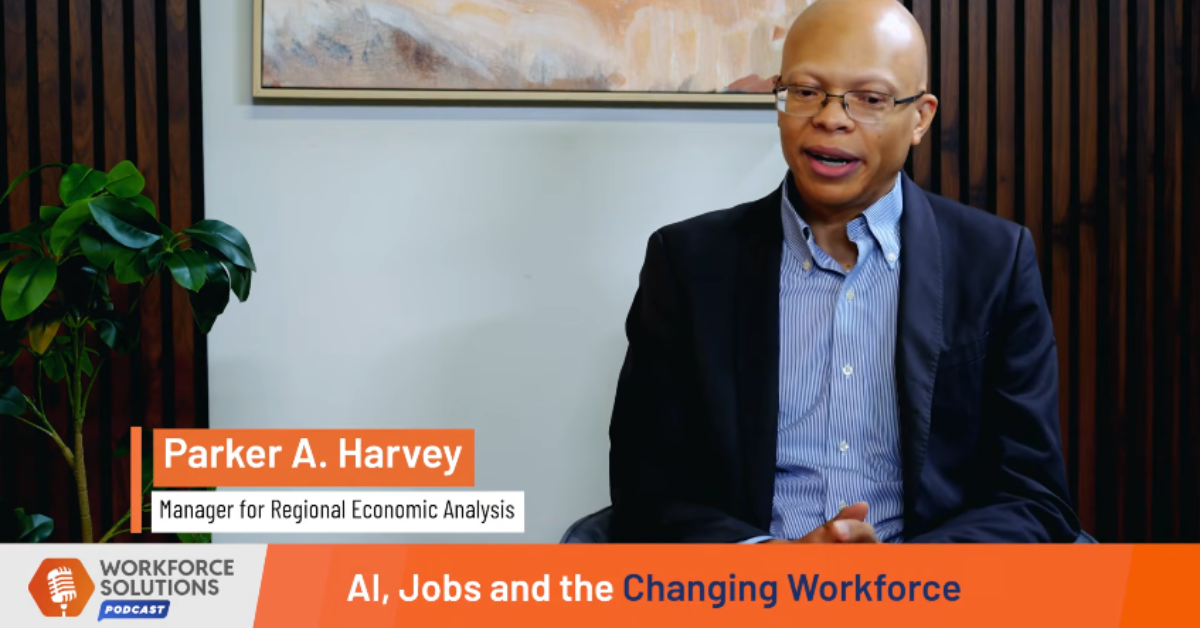
Artificial intelligence is already changing the way people work, but for workers trying to figure out what that means for their careers, one piece of advice from Gulf Coast Workforce Board Regional Economist Parker Harvey is straightforward: start learning how to use it.
In a recent Workforce Solutions podcast conversation with Executive Director Juliet Stipeche, Harvey discussed how AI is affecting jobs, education and career decisions. While he said the full impact on employment is still unclear, he believes workers should begin developing AI skills rather than waiting to see exactly how the technology changes their industry.
“Even if their company or particular organization isn’t using it, they should start doing it on their own, on the side, or however they might acquire that skill, because it’s gonna come up again somewhere else,” Harvey said.
AI Is Becoming Another Workplace Skill
Harvey compared AI with earlier technologies such as spreadsheets, which changed some aspects of accounting and bookkeeping but did not eliminate the need for people who could understand the information and use it to make decisions.
He sees AI as somewhat different because it can go beyond speeding up a task. It can also provide information and insights, making critical thinking and judgment even more important.
That is part of why Harvey describes AI as “cognitive automation.”
For someone in the first few years of their career, his advice is not to wait for an employer to introduce AI before learning about it. Workers can experiment with the technology independently and begin figuring out where it could be useful in their own work.
The Workplace Is Changing, but the Basics Still Matter
Harvey also pointed to another skill set that is not going away: the ability to work with other people.
As AI takes on more basic tasks, he said employers may place even greater value on the skills that technology cannot easily replace, particularly communication and relationship-building.
“So being especially good at being able to demonstrate that is really gonna mean a lot more going forward,” Harvey said.
He also emphasized that business still depends on personal relationships.
“Business is still done with per- like handshakes, in-person relationships, things like that, so the soft skills will continue to matter because that’s really where things happen.”
For workers, that means developing AI skills does not have to come at the expense of communication, collaboration or other workplace skills. Both can be part of continuing professional development.
Young Workers Are Already Responding to AI
AI is also influencing career decisions before people even enter the workforce.
Harvey pointed to students who are reconsidering computer science because they believe AI could affect traditional technology careers. Whether those concerns ultimately prove accurate or not, he said, the technology is already influencing how people think about their education and career options.
He also sees a role for colleges and universities in helping students understand how AI should be used. Rather than simply banning the technology or allowing unrestricted use, Harvey said institutions could establish clear expectations around when AI is appropriate and when students should complete work without it.
That could help students develop both subject expertise and the ability to use AI responsibly.
Keep Building Skills
For people already working, Harvey’s advice is relatively simple: keep learning.
He encourages workers to incorporate AI into their own skill development, even outside their current profession.
For younger people considering their career options, he also cautioned against letting uncertainty about AI discourage them from pursuing work they enjoy or are good at.
“AI is a new variable that you have to kind of work around, but it should not dissuade you from, you know, trying your best to be able to make, you know, a career out of something that you ideally enjoy, but are at least proficient at.”
The technology may continue to change, but Harvey’s message is that workers can prepare by staying curious, developing new skills and continuing to build the human skills that remain important in the workplace.
As he put it:
“Know that it’s working around you at all times.”
For job seekers and workers, understanding how AI is being used can be one more way to stay informed about a changing labor market and make thoughtful decisions about future skills and career paths.
Explore in-demand careers and connect with top employers at upcoming Workforce Solutions hiring events. Register today to secure your spot and access career-building resources.


